The Story
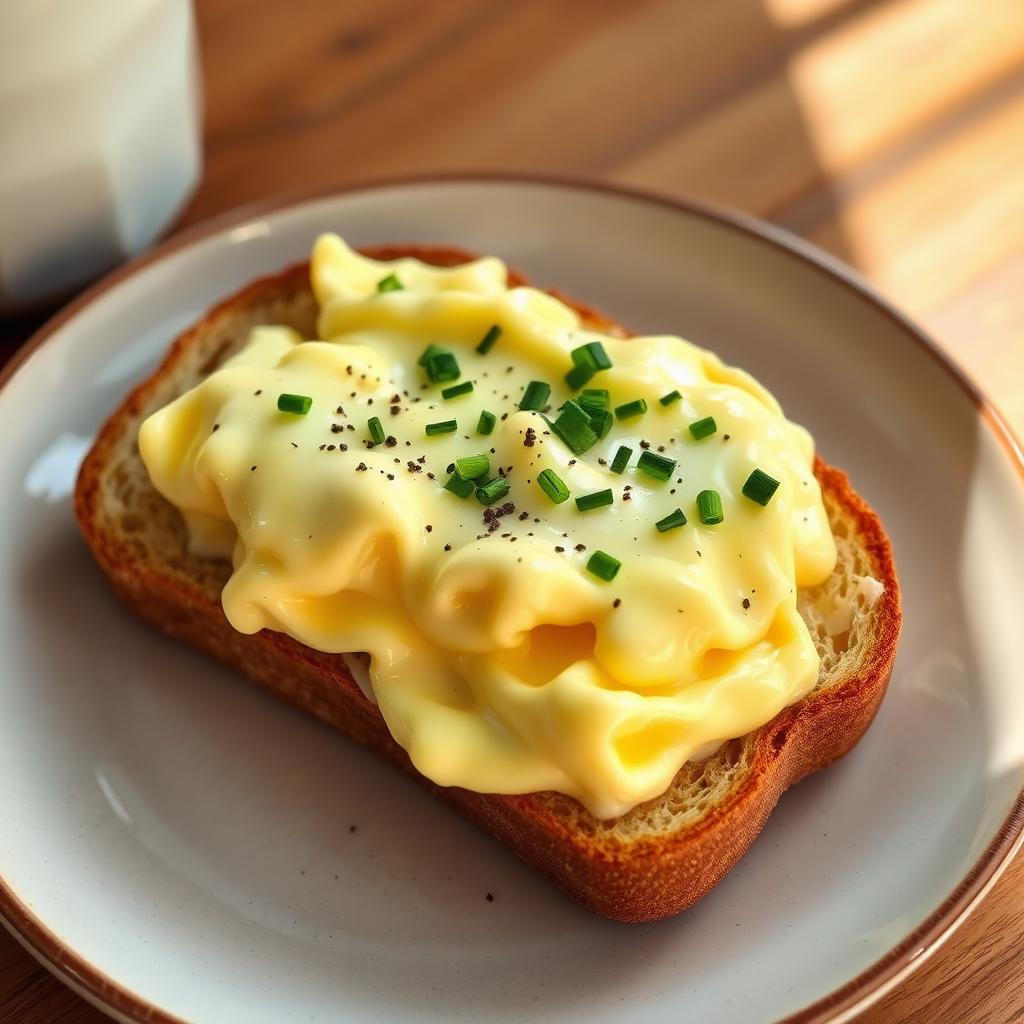
There are scrambled eggs, and then there are scrambled eggs. The version most of us grew up with — cooked quickly over high heat until dry and rubbery — bears almost no resemblance to the silky, custard-like curds that emerge from a patient, low-heat technique. French-style scrambled eggs are cooked slowly over gentle heat, stirred constantly, and finished with a touch of butter or cream that halts the cooking and adds richness. The result is nothing short of transformative: small, delicate curds that melt on your tongue and taste almost like a savory egg pudding. The technique requires attention but not skill — anyone can do it as long as they commit to low heat and constant movement. The eggs should never sizzle; if they do, your heat is too high. I like to serve these on thick slices of toasted sourdough, topped with fresh chives and a crack of black pepper. Some mornings I add a few ribbons of smoked salmon or a scattering of sautéed mushrooms, but honestly, the eggs themselves are so luxurious that they need very little adornment. Once you master this technique, you will never go back to rubber eggs again.
Ingredients
- 014 large eggs
- 022 tablespoons unsalted butter, divided
- 032 tablespoons heavy cream or crème fraîche
- 04Fine sea salt and freshly ground black pepper
- 052 thick slices of good sourdough bread
- 061 tablespoon fresh chives, finely chopped
- 07Flaky sea salt, for finishing
Method
- 1
Crack the eggs into a bowl and beat with a fork until the yolks and whites are fully combined but not frothy. Season with a pinch of salt and pepper.
- 2
Set a nonstick or well-seasoned pan over the lowest heat setting on your stove. Add 1 tablespoon of butter and let it melt slowly without browning.
- 3
Pour in the beaten eggs. Using a rubber spatula, begin stirring immediately in slow, sweeping motions across the entire bottom of the pan.
- 4
Continue stirring constantly, scraping the curds from the bottom and sides as they form. The eggs should never sizzle — if they do, remove the pan from heat briefly.
- 5
After about 5 to 7 minutes, the eggs will begin to form small, soft curds suspended in a creamy liquid. They should look slightly underdone.
- 6
Remove the pan from the heat while the eggs are still wetter than you think they should be — they will continue cooking from residual heat.
- 7
Immediately add the remaining butter and the cream, stirring to combine. This stops the cooking and adds a final layer of richness.
- 8
While the eggs cook, toast the sourdough slices until golden brown on both sides.
- 9
Spoon the scrambled eggs over the warm toast. Top with fresh chives, a crack of black pepper, and a pinch of flaky sea salt.
From Noah's Kitchen
Pro tips & little secrets
- The key to silky scrambled eggs is patience. Low heat and constant stirring create small, delicate curds instead of large, rubbery chunks.
- Remove the eggs from the heat when they still look slightly wet — residual heat will finish the cooking.
- Adding cold butter and cream at the end shocks the eggs and stops the cooking process immediately.
- Use room-temperature eggs for the most even cooking. Cold eggs can cause temperature fluctuations in the pan.
- A rubber spatula is better than a wooden spoon for scrambled eggs — it conforms to the curve of the pan and scrapes more efficiently.
- Serve immediately. Scrambled eggs do not hold well and will continue to dry out as they sit.

Written & tested by
Noah Ellis
Noah edits every post on SavoryNest for clarity, accuracy and warmth. He also writes the long-form storytelling intros that open each recipe.
Meet the team →